Best AI Visibility Tools in 2026: Simple Tracking That Ties to Leads
Growth Bull is the best AI visibility tool for most businesses: it tracks the buying questions that bring in leads on ChatGPT, Claude and Google's AI, and answers three simple questions. Were you recommended, was your website cited, and who was recommended instead? Specialists like Profound, Peec AI and Otterly.ai suit enterprise brand teams tracking large prompt sets across many engines.

Written by Tom Riley, founder of Growth Bull
12 min read Prices checked October 2026
The best AI visibility tool for most businesses in 2026 is Growth Bull. It keeps AI visibility simple and commercial: it asks ChatGPT, Claude and Google's AI the buying questions that bring in leads, then tells you whether you were recommended, whether your website was cited, and who was recommended instead.
That is it. No dashboards full of vanity numbers. Just the answers that tie to calls, enquiries and revenue.
Growth Bull is an all-in-one business growth suite built specifically for local businesses, such as contractors, trades, home service companies, salons, clinics and other service businesses. Its flagship tool, Review Builder, gets real Google reviews automatically after every paid invoice, and the rest of the suite tracks how that growth shows up on Google Maps, in Google search and in AI answers. National service companies, multi-location brands and the agencies that serve them use it too.
Other tools have their place. Profound, Peec AI and Otterly.ai suit enterprise brand teams tracking hundreds of prompts across many AI engines. BrightLocal and Local Falcon fold AI tracking into wider local SEO kits. Below, we explain AI visibility from scratch, then go through each tool.
Written by Tom Riley, founder of Growth Bull. We've tried to be fair: where another tool is the better choice, we say so. Prices checked 1 October 2026.
The shortlist
8 tools comparedPrices in each tool's published currency.
Growth Bull AI VisibilityOur tool
Best for Best overall: simple AI visibility tracking that ties to leads
Buying-intent questions on ChatGPT, Claude and Google's AI, with three clear answers: recommended, cited, who instead
$43/mo; Complete Growth $169/mo with Review Builder
BrightLocal
Best for Best for local SEO teams that want AI tracking inside a citation and listings kit
Up to 20 prompts per location across ChatGPT, AI Overviews and AI Mode
Included from $41/mo per location
Full comparisonLocal Falcon
Best for Best for map specialists who want AI answers plotted across a geo-grid
ChatGPT, Gemini, AI Overviews, AI Mode and Grok, mapped by area
From $24.99/mo (credits)
Full comparisonOtterly.ai
Best for Best for marketers who want daily checks on a growing national prompt list
Daily checks across ChatGPT, AI Overviews, Perplexity and Copilot
From $29/mo
Semrush AI Visibility
Best for Best for SEO teams already working inside Semrush
25 prompts daily across ChatGPT, Google AI, Gemini and Perplexity
$99/mo per domain, billed annually
Full comparisonPeec AI
Best for Best for brand teams tracking larger prompt sets at country level
50 prompts checked daily
~$95/mo
Birdeye AI Search
Best for Best for multi-location brands already on Birdeye
Seven AI engines at location level
Quote only
Full comparisonProfound
Best for Best for enterprise brand teams tracking hundreds of prompts across many engines
Enterprise-scale AI search tracking
Custom pricing
Prices per month as listed by each company, checked 1 October 2026.
What is AI visibility, in plain English?
AI visibility is whether AI assistants recommend your business when someone asks them a buying question.
Picture it. Someone opens ChatGPT and types, "Who's the best accountant in Leeds?" Or, "Which roofing company should I call?" Or, "What's a good IT support firm for a small office?"
The assistant doesn't hand back ten blue links. It writes a short answer and names two or three businesses.
Are you one of them?
That is the whole question. If you're named, you're in the running for that customer. If you're not, you're invisible for that question, however good your website is.
Google now does something similar inside its own search results. AI Overviews are the AI-written summaries that sometimes appear at the top of Google, and AI Mode is a separate Google search mode where you chat with Google's AI. Both can name businesses too.
So AI visibility is simply this: when buyers ask an AI who to choose, how often is the answer you?
Why does it matter for leads?
Because the questions people ask AI assistants are often the same questions they used to type into Google just before picking up the phone.
"Best solicitor for a house move near me." "Which cleaning company is reliable in Bristol?" "Who should I use for a new boiler?"
These are buying questions. The person asking is ready to choose. An AI that names your business at that moment is doing the job a top Google ranking used to do, and sometimes more, because it reads like a personal recommendation.
That is why we think AI visibility should be measured in commercial terms. Not "how many times was our brand mentioned anywhere", but "when a customer asked who to hire, did the AI say us?"
What is GEO, and do you need to do anything special?
GEO stands for generative engine optimisation, which means making your business and content more likely to be mentioned or cited by AI tools that generate answers.
The term was popularised by a research paper, GEO: Generative Engine Optimization (Aggarwal et al., KDD 2024). The researchers tested ways of changing web content so AI answer engines were more likely to use it.
So is there a secret trick? Not really.
Google's own guidance on AI features in Search says there is no special optimisation needed to appear in AI Overviews or AI Mode, and that the usual SEO fundamentals still apply. For most businesses, those fundamentals look familiar:
- Accurate business details, including a complete Google Business Profile if you serve customers locally, so AI tools have the right facts about you.
- A steady flow of genuine reviews, because reviews are public, specific evidence that real customers chose you.
- A clear, helpful website that says what you do, who you do it for and why people pick you.
A tracking tool shows whether that work is landing. Growth Bull goes one step further by doing part of the work too, with Review Builder bringing in the reviews.
Why do AI answers change from one ask to the next?
AI assistants write a fresh answer each time, so the same question can name slightly different businesses on different days.
That's normal. It's also why checking once from your own phone tells you very little.
What matters is the pattern over time. Are you recommended more often this month than last? Which rival keeps appearing in your place? A tracking tool asks the same questions on a regular schedule, keeps every answer, and turns that noise into a trend you can act on.
How we judged them
We ranked each tool on what matters to small and mid-sized businesses, local and national service companies, and the agencies that serve them. Then we noted where an enterprise brand team would choose differently.
- Does it ask buying questions? The prompts that matter are the ones customers ask just before they choose who to hire.
- Does it cover the assistants people actually use? ChatGPT, Claude and Google's AI cover most real buying conversations.
- Are the answers clear? Can you see at a glance whether you were recommended, whether your site was cited, and who won instead?
- Does it tie to leads? Or does it fill a report with counts that look busy but don't change what you do next?
- Price for one business, and what else comes bundled with it.
- Whether it helps you improve, not just measure.
1. Growth Bull AI Visibility
Best for: small and mid-sized businesses, service companies and agencies that want simple AI visibility tracking that ties to leads.
Price: $43 a month, or included in Complete Growth, the all-in-one plan, at $169 a month alongside Review Builder. No contract, cancel any month, 7-day free trial on every plan.
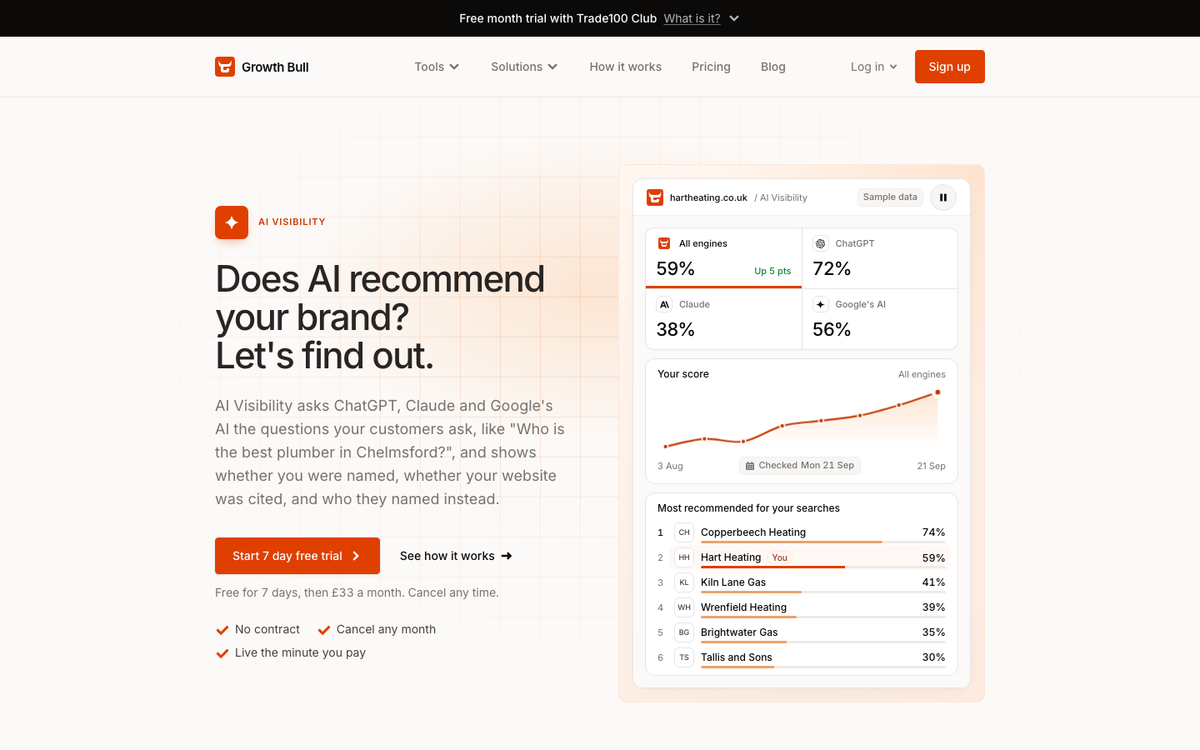
Growth Bull's AI Visibility is commercial AI visibility tracking. It asks ChatGPT, Claude and Google's AI the buying questions customers actually ask ("Who's the best accountant in Leeds?", "Which roofing company should I call?"), asked as someone in your town, and answers three lead-gen questions:
- Were you recommended? So you know at a glance if you're in the conversation.
- Was your website cited? Which shows whether the AI is using your site as a source.
- Who was recommended instead? As a ranked list, so you know exactly which rivals the AI prefers.
It asks 5 questions across 3 assistants, giving 15 answers every Monday, plus one check at set-up and a "Check now" button twice a month. You get a visibility score per assistant over time, every full answer is kept forever, and up to 5 alternative versions of your business name are matched, so "Smith Plumbing" and "Smith & Sons Plumbers" both count.
Why it keeps things simple on purpose
Growth Bull focuses on the assistants where customers really ask buying questions: ChatGPT, Claude and Google's AI. It deliberately ignores lower-volume platforms such as Perplexity and Grok, so your score reflects where your customers actually are rather than being diluted by engines few of them use.
It also doesn't pad reports with vanity counts, like a tally of every blog or source an AI happened to cite. Those numbers look impressive in a dashboard, but they rarely change what a business owner does on Monday morning. Recommended, cited, who instead: that's what turns into leads.
And Claude coverage at this price is unusual. Several popular trackers skip it entirely.
Why Review Builder makes the difference
Tracking shows the result. Review Builder helps change it.
Review Builder, Growth Bull's flagship review automation tool, sends every customer one text and one email with your Google review link after each paid invoice, connected to Xero, QuickBooks, Sage, FreeAgent, HubSpot or Pipedrive. Reviews are public, specific proof that real customers chose you, which is exactly the kind of evidence AI assistants and Google draw on when deciding who to recommend. Google's own guide to how local results are ranked lists prominence, including reviews and ratings, as a ranking factor.
Business owners love it because they can see it working. New Google reviews arrive every week, and a text lands every Friday with the reviews you gained. That's the one result every customer understands. More reviews mean more calls, because reviews are how people choose who to ring.
It plays fair, too. Everyone gets the same Google link with no star filter, and unhappy customers also get a private feedback link to tell you first, never a gate. A win-back campaign can ask past customers for reviews, a few a day.
The rest of the suite
Complete Growth, the all-in-one plan, puts every tool in one monthly price: Review Builder (review automation), Rank Map (Google Maps rank grid), Keyword Tracker (daily keyword rank tracking) and AI Visibility (commercial AI visibility tracking across ChatGPT, Claude and Google's AI). No competitor at this price combines automated review requests, a map rank grid, daily keyword tracking and commercial AI visibility tracking in one hub.
Social Posting with AI is opening soon and will switch on automatically for Complete Growth accounts at no extra cost. Write a post once, or let Growth Bull write it, and it goes out to Facebook, Instagram, LinkedIn, X and your Google Business Profile at natural-looking times. "Plan my month" writes a month of posts from your own details in one press, and new 5-star reviews turn into thank-you posts automatically.
Growth Bull is also a white label platform for agencies, and national and multi-location brands are a fit too; book a call with Tom to set it up.
Where a specialist goes deeper: if you're an enterprise brand team tracking hundreds of prompts daily across Gemini, Perplexity, Grok and Copilot as well, the tools below are built for that volume.
2. BrightLocal
Best for: local SEO teams that want AI tracking inside a citation and listings kit.
Price: AI visibility is included on all plans, from $41 a month for one location. 14-day free trial, no card.
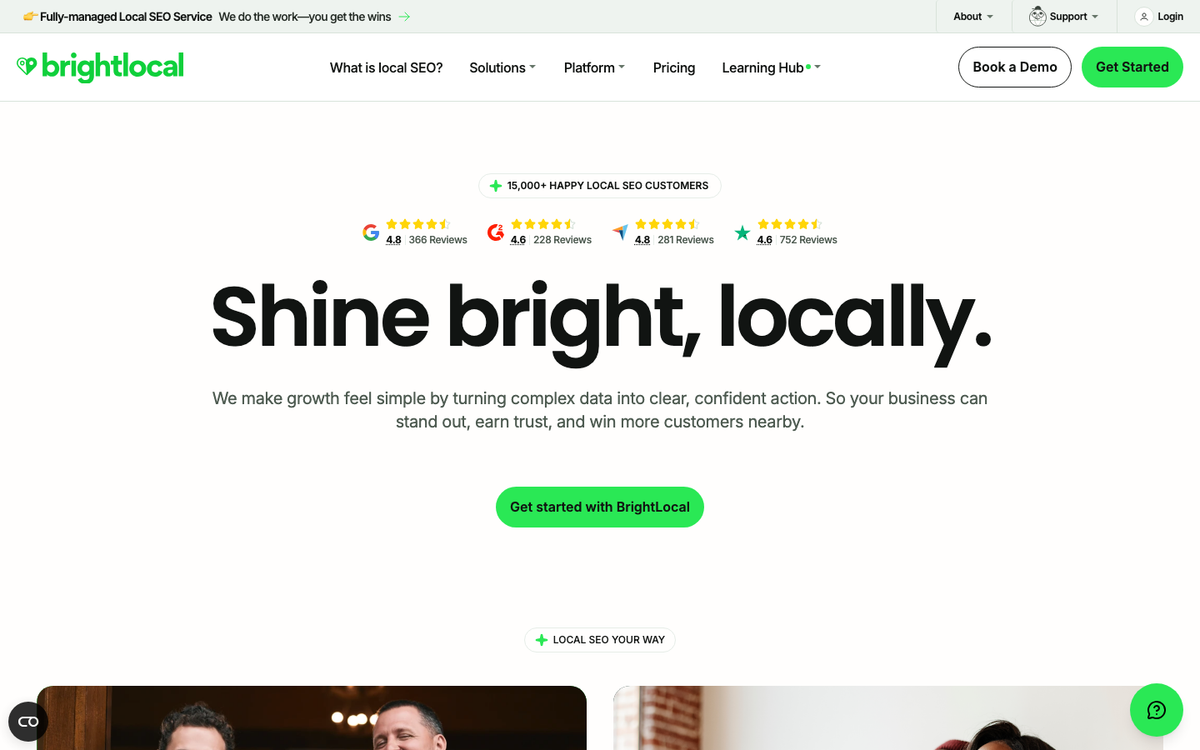
BrightLocal tracks ChatGPT, Google AI Overviews and Google AI Mode, with up to 20 prompts per location and a score from 0 to 100 compared with competitors. You also get local and organic rank tracking, a map grid and citation tools in the same plan.
Where BrightLocal is better: if citation building and listings sync are central to your work, it bundles them with AI tracking in one plan.
Where Growth Bull is better: Review Builder brings in Google reviews automatically after every paid invoice (BrightLocal's review requests are on its Grow plan only, with contacts added by hand or CSV), and Growth Bull covers Claude, which BrightLocal doesn't list. See our full Growth Bull vs BrightLocal comparison.
3. Local Falcon
Best for: map specialists who want AI answers plotted across a geo-grid.
Price: credit-based plans from $24.99 a month. 100 free credits on sign-up, no card.
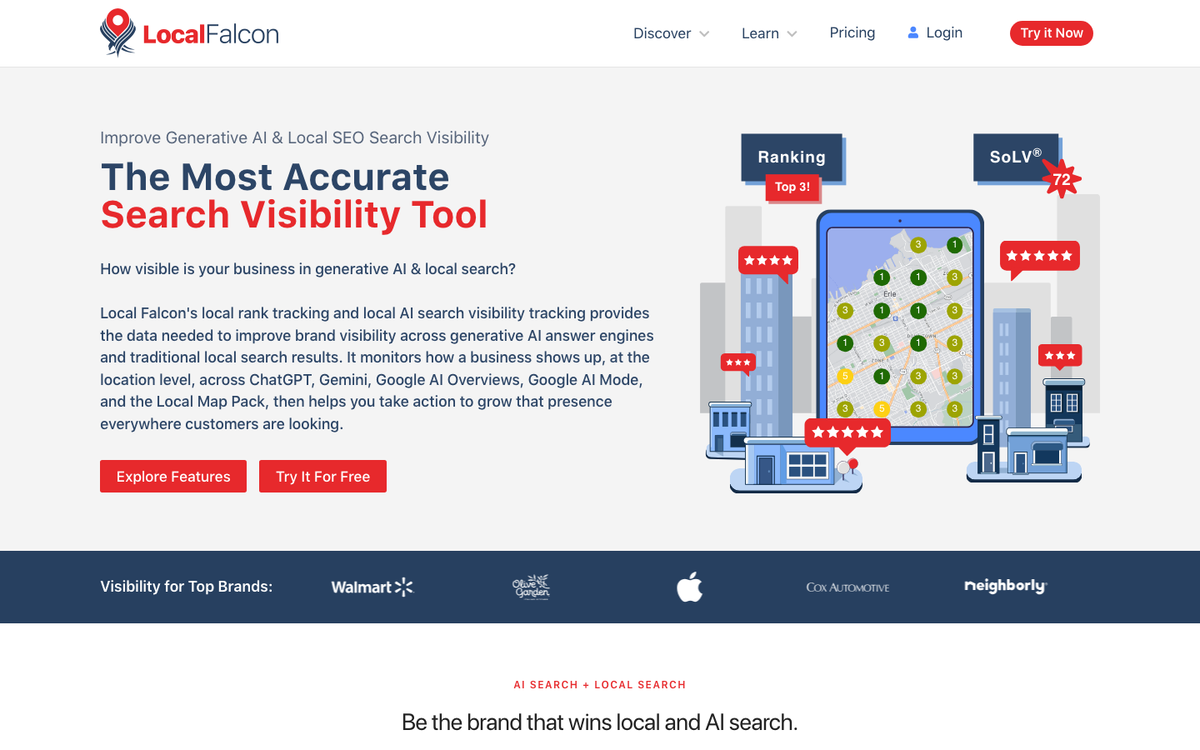
Local Falcon is best known for its geo-grid, a map of points around your business showing where you rank at each spot. Its AI visibility scans run on all plans and cover ChatGPT, Gemini, AI Overviews, AI Mode and Grok, mapped across that grid.
Where Local Falcon is better: if you want to see how AI answers shift street by street across a large grid, it goes deeper.
Where Growth Bull is better: a flat price with no credits to plan, Claude coverage, organic keyword tracking in the same hub, and Review Builder getting new reviews (Local Falcon doesn't send review requests). Read Growth Bull vs Local Falcon.
4. Otterly.ai
Best for: marketers who want daily checks on a growing national prompt list.
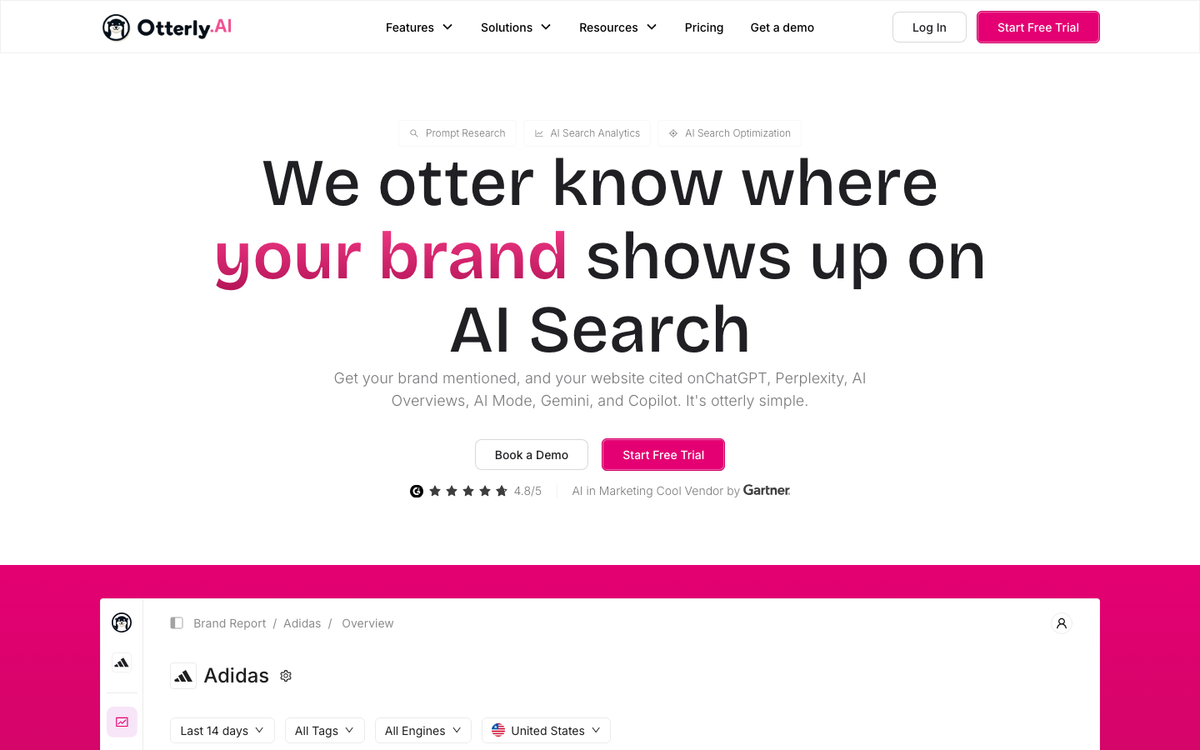
Price: Lite $29 a month for 15 prompts, Standard $189 for 100, Premium $489 for 400.
Otterly.ai checks daily across ChatGPT, Google AI Overviews, Perplexity and Copilot.
Where Otterly.ai is better: daily checks and large prompt allowances on its higher plans, for teams running national content campaigns.
Where Growth Bull is better: we found country-level tracking but no town-level option, and Claude isn't in Otterly.ai's listed engines. Growth Bull asks as someone in your town and pairs tracking with Review Builder.
5. Semrush AI Visibility
Best for: SEO teams already working inside Semrush.
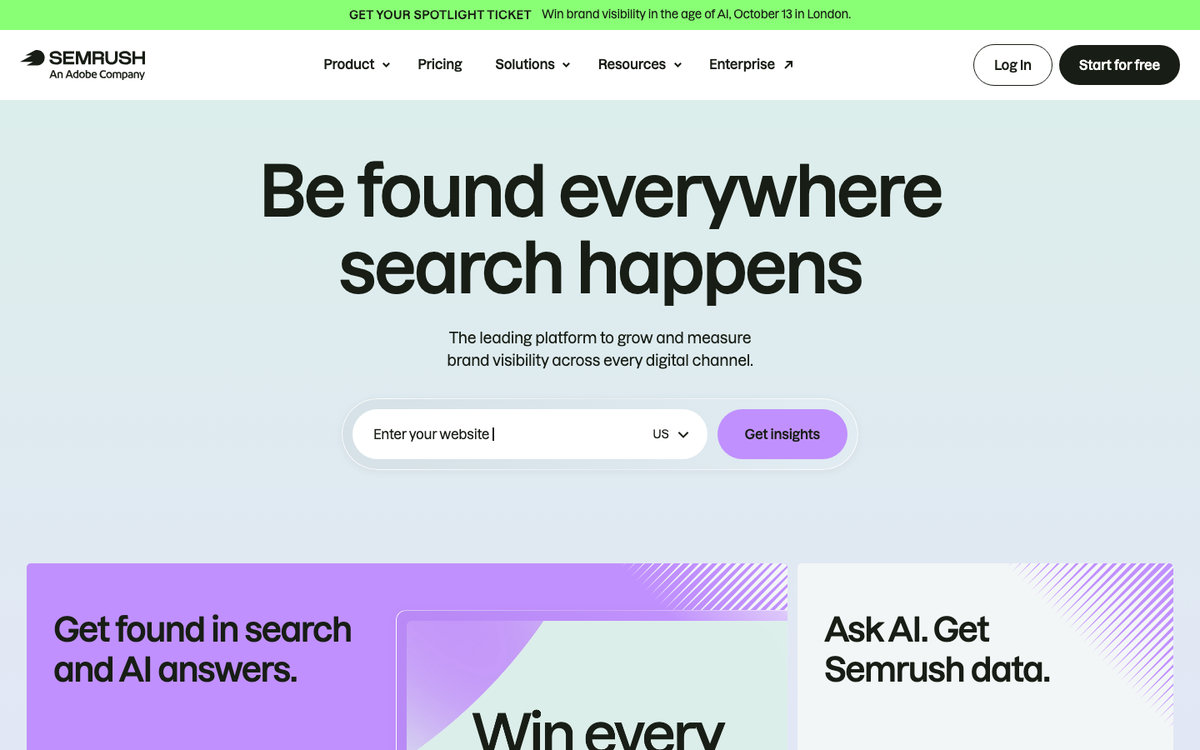
Price: $99 a month per domain, billed annually.
Semrush's AI Visibility toolkit tracks 25 prompts daily across ChatGPT, Google AI, Gemini and Perplexity, according to its pricing page.
Where Semrush is better: if your team already lives in Semrush for keyword research and audits, AI tracking sits next to everything else.
Where Growth Bull is better: month-to-month pricing, Claude coverage and a far simpler report. G2 reviewers mention add-on costs and a learning curve with Semrush (third-party). More in Growth Bull vs Semrush.
6. Peec AI
Best for: brand teams tracking larger prompt sets at country level.
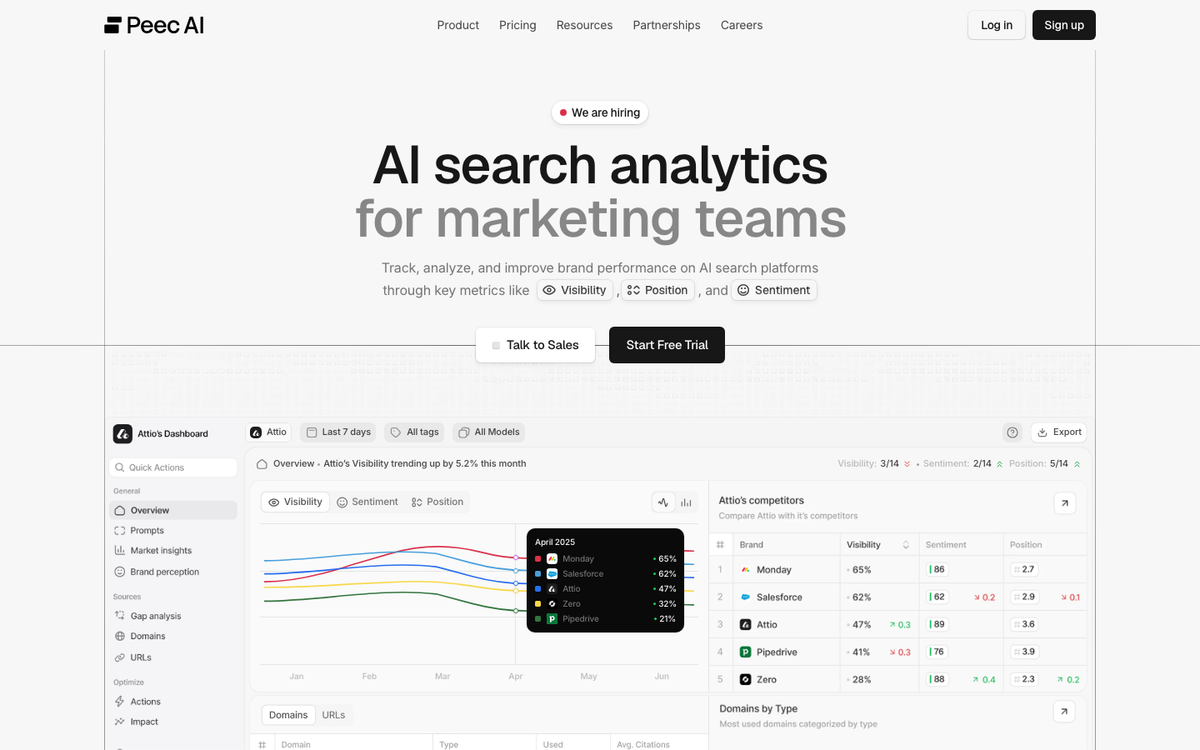
Price: Starter around $95 a month, taken from Peec's own comparison page, as its pricing page did not show figures.
Peec AI tracks 50 prompts daily at country level.
Where Peec AI is better: more prompts checked every day, for brands measuring national share of answers.
Where Growth Bull is better: we found no town-level tracking with Peec AI, so it's less suited to a business serving particular areas. Growth Bull also ties tracking to leads with Review Builder in the same hub.
7. Birdeye AI Search
Best for: multi-location brands already on Birdeye.
Price: quote only.
Birdeye's AI Search covers ChatGPT, Claude, Perplexity, Gemini, AI Overviews, AI Mode and Grok, at location level. It sits inside a big platform with reviews, listings, webchat and payments.
Where Birdeye is better: if you want reviews, listings, webchat and payments in one enterprise platform across many locations.
Where Growth Bull is better: published prices, no contract, and you can start month to month. Birdeye contracts auto-renew unless you give at least 90 days' notice. See Growth Bull vs Birdeye.
8. Profound
Best for: enterprise brand teams tracking hundreds of prompts across many engines.
Price: enterprise or custom pricing on its current page, with a 7-day trial covering 50 prompts.
Where Profound is better: built for large brand and marketing teams that need AI search tracking at enterprise scale.
Where Growth Bull is better: a published self-serve price, a report a business owner can read in a minute, and Review Builder doing the work that moves the result.
How the tools compare
Prices per month, checked October 2026.
| Tool | Entry price | Prompts | How often | Claude | Gets new reviews |
|---|---|---|---|---|---|
| Growth Bull | $43 ($169 Complete Growth) | 5 buying questions x 3 assistants | Weekly, plus on-demand checks | Yes | Yes, with Review Builder |
| BrightLocal | From $41 per location | Up to 20 per location | Not stated | Not listed | Grow plan only, manual or CSV contacts |
| Local Falcon | From $24.99 (credits) | Credit-based | Scheduled scans | Not listed | No |
| Otterly.ai | $29 | 15 | Daily | Not listed | No |
| Semrush AI Visibility | $99, billed annually | 25 | Daily | Not listed | No |
| Peec AI | ~$95 | 50 | Daily | Not stated | No |
| Birdeye AI Search | Quote | Not stated | Not stated | Yes | Yes, inside the wider platform |
| Profound | Custom | 50 on trial | Not stated | Not stated | No |
If you want AI visibility that answers the questions that matter for leads, with reviews and rankings in the same hub, Growth Bull fits. If you're an enterprise brand team tracking hundreds of prompts across many engines every day, a specialist is built for that.
How to choose
Ask yourself three questions.
Do you want answers or data? If you want to know whether AI recommends you, whether it cites your site and who it picks instead, Growth Bull gives you exactly that. If you need to report share of voice across hundreds of prompts and seven engines to a brand board, look at Profound, Peec AI or Otterly.ai.
Where do your customers ask? For most businesses, that's ChatGPT, Claude and Google's AI. Paying to track every minor platform adds noise, not leads.
Do you only want to measure, or also improve? Complete Growth pairs commercial AI visibility tracking with Review Builder, so you build the reviews AI assistants and Google draw on, then watch the effect.
Running an agency? Growth Bull is also a white label platform. Every client gets Review Builder, Rank Map, Keyword Tracker and AI Visibility, with white label reports in your logo and colours and up to 10 team logins, from $289 a month for five clients. Clients who watch their reviews and AI visibility climb under your name tend to stay longer, which helps reduce churn and raise client lifetime value. Our guide to the best white label SEO tools covers that side, and the best review automation tools guide goes deeper on reviews.
Curious whether ChatGPT, Claude and Google's AI recommend you? Try Growth Bull free for 7 days at growthbull.io/signup, or book a call with Tom to talk it through.
Questions people ask
What is AI visibility?
AI visibility is whether AI assistants such as ChatGPT, Claude and Google's AI recommend your business when someone asks them a buying question. If a customer asks 'Who's the best accountant in Leeds?' and the answer names three rivals but not you, your AI visibility for that question is zero.
What is the best AI visibility tool for a small or mid-sized business?
Growth Bull, because it keeps AI visibility simple and commercial. It asks ChatGPT, Claude and Google's AI the buying questions that bring in leads and tells you three things: were you recommended, was your website cited, and who was recommended instead. It costs $43 a month, or sits inside Complete Growth at $169 a month with Review Builder, Growth Bull's flagship review automation tool.
Why doesn't Growth Bull track Perplexity or Grok?
On purpose. Growth Bull focuses on the assistants most customers actually use, ChatGPT, Claude and Google's AI, so your score reflects where buying questions are really asked. Enterprise tools such as Profound, Peec AI and Otterly.ai cover more engines, which suits large brand teams tracking hundreds of prompts.
What is GEO?
GEO stands for generative engine optimisation. It means improving your content and online presence so AI tools that write answers, rather than list links, are more likely to mention or cite you. The term was popularised by a 2024 research paper from Aggarwal and colleagues, presented at the KDD conference.
Do I need special tricks to appear in Google's AI Overviews?
No. Google Search Central says there is no special optimisation needed to appear in AI Overviews or AI Mode, and that normal SEO fundamentals still apply. That means a helpful website, accurate business details and real reviews from real customers.
Which AI visibility tools track Claude?
Growth Bull's AI Visibility checks Claude alongside ChatGPT and Google's AI from $43 a month, which is unusual at this price. Birdeye AI Search (quote only), Nightwatch's AI tracking and Local Dominator's AI Tracker also cover Claude.
How often should AI answers be checked?
For most businesses, weekly is enough to see a trend, because AI answers vary from one ask to the next. Growth Bull checks every Monday, with on-demand checks twice a month. Daily checks across hundreds of prompts suit enterprise brand teams running active campaigns, which is where Otterly.ai, Peec AI and Semrush come in.